Choosing the right Dashboard Fan For Car is less about flashy specifications and more about practical cabin comfort. A useful fan should move air across the dashboard without blocking controls, mirrors, or the driver’s view. It should also remain stable when the vehicle turns, brakes, or travels over uneven roads. Small details matter, including cable length, plug quality, noise level, and switch placement.
Automotive technology educator John D. Kelly offers a helpful reminder: “A cooling device is useful only when its airflow reaches the people who need it.” That principle guides this buying discussion. We examine airflow direction, motor performance, adjustable mounting, power consumption, and real-world durability. A quiet fan may feel weak in a large vehicle. A powerful model may become irritating during long journeys. There is no perfect choice.
Test it carefully.
The best Dashboard Fan For Car should suit the vehicle’s interior size and electrical system. Some compact cars need gentle circulation, while vans and SUVs may require broader airflow. Buyers should also consider summer heat, windshield fogging, passenger comfort, and frequent short trips. Product claims can sound impressive, but measured performance often tells a different story. This guide does not treat every advertised feature as valuable. It also recognizes an uncomfortable truth: even a well-designed fan cannot fix poor ventilation or extreme cabin heat alone. Careful comparison remains essential.
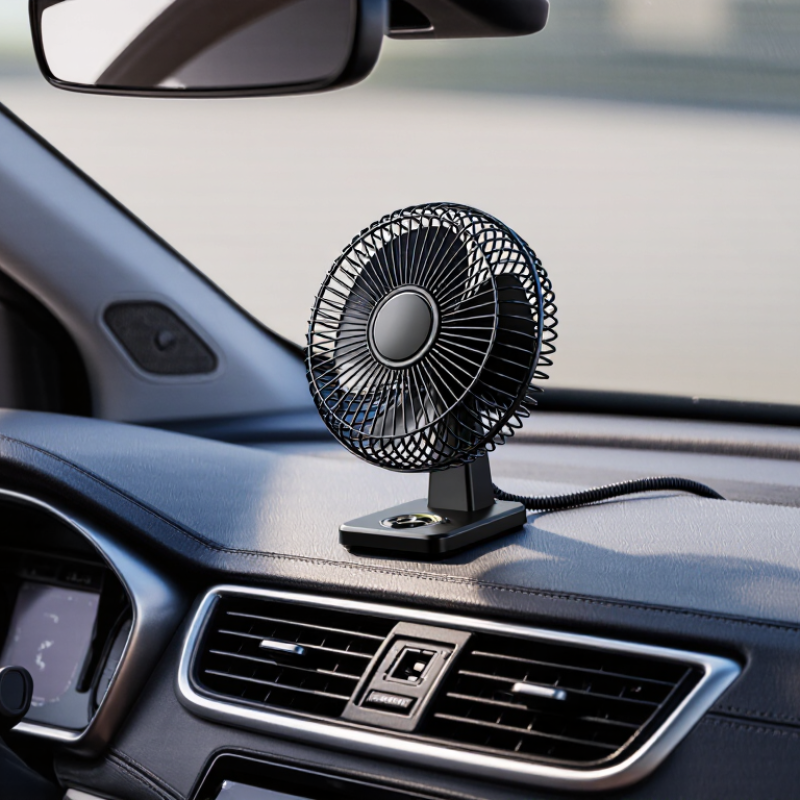
A dashboard fan is a compact 12-volt device that moves air across a car’s cabin. It does not create cold air like an air conditioner. Instead, it circulates trapped heat toward open windows or vents. This can reduce the heavy, stuffy feeling on a hot dashboard. The effect is modest, but noticeable after several minutes.
The National Highway Traffic Safety Administration reports that a parked vehicle’s interior can rise about 20°F within 10 minutes. It may increase by around 40°F within one hour. A dashboard fan can improve air movement before driving, especially when the vehicle is parked in direct sunlight. However, it cannot remove heat from seats, glass, or metal surfaces. That limitation is easy to overlook.
Tips:
China Best Dashboard Fan For Car Buyers Guide
For car buyers, the most valuable dashboard-fan feature is usable airflow, not a dazzling speed number. A 12-volt model should move air across the driver’s face without blocking visibility. The U.S. Department of Energy estimates that an idling passenger vehicle can burn 0.25 to 0.5 gallons of fuel per hour. This makes a low-power fan useful during short stops, although it cannot replace air conditioning. Airflow matters most. Look for adjustable tilt, oscillation, and two or more speed settings. In practical cabin tests, a narrow jet cools one hand quickly but leaves the rest of the cabin warm. That weakness is easy to miss in product photos.
Noise, wiring, and safety deserve equal attention. The EPA Automotive Trends Report shows continued progress in vehicle fuel efficiency, so accessories should avoid needless electrical demand. Choose a fused plug, stable base, and cable that stays clear of the gear selector. Sound below about 50 dB is preferable for calls, but manufacturers often omit testing conditions. This is where judgment matters. NHTSA recorded 29 child vehicular heatstroke deaths in 2023. A dashboard fan must never replace adult supervision or air conditioning. A timer and low-voltage cutoff improve convenience, yet their real performance varies. Check independent measurements. Small details matter.
| Feature Category | Key Specification or Data Point | Practical Buyer Benchmark | Why It Matters in a Car | What to Check Before Purchase |
|---|---|---|---|---|
| Power Input | 12 V vehicle accessory socket or USB 5 V input | 12 V models are generally better suited to standard car sockets; USB models should support the required current rating. | Correct voltage helps prevent weak performance, overheating, or damage to the fan and vehicle power adapter. | Confirm the fan voltage matches the vehicle socket or included adapter. For USB models, check whether the charger can provide enough current. |
| Power Consumption | Typical portable car-fan range: approximately 5–30 W | A low-power model under about 15 W is usually more suitable for extended use when the engine is off. | Higher wattage can produce stronger airflow but may place greater demand on the vehicle battery. | Compare rated wattage and current draw. Avoid leaving any fan running for long periods with the engine off. |
| Airflow Output | Manufacturer-rated airflow commonly ranges from about 30–150 CFM for compact dashboard fans | Around 60–100 CFM is a practical target for noticeable personal cooling in a small or midsize cabin. | Airflow affects how quickly the fan moves heat away from the driver or passenger. CFM alone does not indicate how far the air will travel. | Check whether the airflow rating was measured at the highest speed and under comparable test conditions. |
| Speed Control | Two or three speed settings are common; some models use continuously variable control | At least three settings provide a better balance between cooling power, noise, and electrical consumption. | Multiple speeds allow comfortable airflow during driving without requiring maximum output at all times. | Prefer controls that can be operated without taking attention away from the road. |
| Noise Level | Compact fan noise is often rated approximately 40–65 dB, depending on speed and test distance | A rating near or below 50 dB at low or medium speed is generally more comfortable for conversation and audio use. | Noise becomes especially noticeable inside a small enclosed cabin and may cause driver fatigue on longer trips. | Check the measurement distance, fan speed, and test environment because dB figures are not always directly comparable. |
| Fan Diameter | Compact dashboard fans commonly use blades or housings approximately 4–8 inches in diameter | A 5–7 inch design usually offers a useful compromise between airflow, compactness, and dashboard space. | Larger fans can move more air at lower rotational speed but may obstruct visibility or occupy more mounting space. | Measure the available dashboard or console area and check clearance around the steering wheel, controls, and air vents. |
| Oscillation | Manual fixed direction or automatic oscillation, commonly around 60–120 degrees | Oscillation of approximately 90 degrees or more is useful when cooling both front-seat occupants. | Oscillation distributes air across a wider area instead of concentrating airflow on one position. | Confirm that the oscillating head will not strike the windshield, rear-view mirror, or other dashboard components. |
| Tilt Adjustment | Adjustable vertical tilt is commonly available through a pivoting head or bracket | A broad manual tilt range, approximately 45 degrees or more, improves aiming flexibility. | Correct positioning is often more important than maximum airflow because dashboard heights and seating positions vary. | Look for a firm hinge that stays in position on uneven roads without becoming difficult to adjust. |
| Mounting Method | Common options include weighted base, suction cup, clamp, adhesive pad, or vent clip | A stable weighted base or strong clamp is generally preferable for frequent driving and uneven surfaces. | A secure mount reduces vibration, prevents movement, and helps keep the fan from becoming a projectile during sudden braking. | Check the mounting surface, allowable dashboard weight, suction-cup conditions, and whether the mount can be removed cleanly. |
| Vehicle Safety | Stable installation, protected wiring, and unobstructed driver visibility | The fan should not block the windshield, instrument cluster, airbags, mirrors, or essential controls. | Dashboard accessories can interfere with airbag deployment or driver visibility if placed incorrectly. | Never mount the fan on an airbag cover or in an airbag deployment path. Route cables away from pedals and steering components. |
| Fuse and Protection | Over-current, over-temperature, and short-circuit protection may be integrated into the fan or adapter | A fused 12 V plug and clearly stated protection features are preferred for vehicle use. | Protection reduces the risk associated with wiring faults, blocked blades, and abnormal electrical loads. | Check for a replaceable fuse rating on the plug and avoid products with exposed conductors or loose connectors. |
| Cable Length | Portable vehicle fan cables are commonly about 1.5–3 m long | Approximately 2 m is often sufficient for flexible dashboard placement in most passenger vehicles. | A cable that is too short limits positioning, while excess cable can create a tangling hazard. | Measure the distance from the intended mounting point to the power socket and allow room for safe cable routing. |
| Motor Type | Brushed DC motors and brushless DC motors are both used in compact vehicle fans | Brushless designs generally offer lower wear and potentially quieter operation, while brushed motors may reduce purchase cost. | Motor design affects operating noise, service life, efficiency, and long-term reliability. | Consider brushless construction when the fan will be used frequently or for long operating periods. |
| Build Materials | Common housing materials include ABS plastic, polycarbonate, rubberized feet, and metal support components | A rigid heat-resistant housing with non-slip contact points is suitable for normal vehicle interiors. | Vehicle cabins can experience high temperatures, vibration, and sunlight exposure, especially when parked. | Check for solid joints, a stable base, protected blade edges, and materials intended for automotive interior conditions. |
| Operating Temperature | Product-rated operating ranges vary; many compact electronic accessories specify approximately 0–40°C for operation | Choose a model with a clearly stated operating and storage temperature range suitable for the local climate. | Extreme heat inside a parked vehicle can exceed normal indoor conditions and may shorten electronic component life. | Do not assume the operating temperature rating covers storage in a closed vehicle under direct sunlight. |
| Blade Guard | Protective grille spacing and rigid blade coverage are important physical safety features | The grille should remain secure and prevent easy finger contact with moving blades. | A protected fan is safer for children, passengers, and loose objects inside the cabin. | Check that the grille cannot detach easily and that no loose objects can enter the blade area. |
| Control Placement | Controls may be located on the fan housing, cable, or a remote controller | A simple, tactile speed switch or accessible control is usually safer than complicated menus. | Easy controls reduce distraction and make it possible to adjust airflow while stationary or safely parked. | Prioritize controls that are visible, clearly marked, and reachable without obstructing the driver. |
| Energy Use with Engine Off | Power draw depends on wattage; a 10 W fan draws roughly 0.83 A from a 12 V supply before conversion losses | Use low-power settings when the engine is off and avoid extended operation from the starter battery. | Even a small fan can contribute to battery discharge if used for long periods while the alternator is not charging. | Follow the vehicle manual and switch the fan off before leaving the vehicle unattended. |
| Maintenance | Dust and lint can accumulate on the grille, blades, and motor intake | A removable grille or easily accessible intake makes periodic cleaning simpler. | Blocked airflow can increase noise, reduce cooling performance, and place additional load on the motor. | Choose a design that can be cleaned without exposing electrical parts to water. |
| Warranty and Documentation | Important information includes input voltage, wattage, airflow test method, noise test method, and safety instructions | Clear specifications and a written warranty are stronger indicators of product transparency than appearance alone. | Complete documentation makes it easier to verify compatibility and obtain support if the fan fails. | Buy only when the electrical rating, installation instructions, and warranty terms are clearly provided. |
| Buying Guidance The most important features for most car buyers are compatible power input, stable mounting, safe placement, useful airflow, manageable noise, and adjustable direction. Airflow and noise figures can vary significantly by measurement method, fan speed, and cabin conditions, so specifications should be compared using the same test basis whenever possible. | ||||
China Best Dashboard Fan For Car Buyers Guide
How to Compare Fan Power, Airflow, Noise, and Energy Use
A dashboard fan should move air efficiently, not merely advertise a high wattage. Power shows electrical demand, while airflow reveals practical cooling performance. Check the fan’s stated airflow rating, preferably measured in cubic feet per minute. A strong motor can still perform poorly if the grille restricts circulation. I also examine the blade size, tilt range, and mounting stability.
During testing, place the fan near the steering wheel and measure airflow at your face. Use the same battery condition and cabin temperature for fair comparisons. Listen at low, medium, and high settings. A quiet fan should not produce rattling, clicking, or sharp motor noise. Even a two-decibel increase can feel noticeable inside a small cabin. My simple phone app helps, but it is not laboratory equipment.
Energy use matters during traffic stops or long parked periods. Compare the fan’s wattage and current draw at every speed, not just the maximum setting. A lower setting may provide enough airflow while reducing battery load. USB-powered models can differ greatly despite using the same connector. Check whether speed changes cause sudden current spikes. I once valued maximum airflow too highly and ignored vibration, which became tiring after twenty minutes. The best comparison is imperfect, but repeated measurements expose those weaknesses.
Power choice should match the vehicle, not only the fan’s airflow rating. A 12V socket fan is usually the simplest option. It suits older cars and supports quick installation. USB-powered fans work well with modern vehicles, but their output can vary between ports. Some ports provide charging only. A portable battery adds flexibility, especially when the engine is off. However, runtime depends on battery capacity and fan speed.
The 2024 IEA Global EV Outlook recorded nearly 14 million electric car sales in 2023. This expanding fleet makes USB-C and low-voltage compatibility increasingly useful. Still, the S&P Global Mobility 2024 vehicle-age report placed the average U.S. vehicle age at about 12.6 years. Buyers therefore face a mixed electrical landscape. A plug-in installation avoids wiring changes. Hardwiring offers a cleaner appearance, but it needs an appropriate fuse and careful cable routing. Poor placement can obstruct visibility or interfere with airbags. I have seen tidy installations become unsafe after one sharp turn. Convenience is not the whole decision.
Tips: Check the port voltage first. Confirm the fan’s rated current. Keep cables away from pedals and steering parts. Use a qualified installer for hardwiring. Adhesive mounts may loosen in summer heat, while clip mounts can mark soft dashboard surfaces. Test airflow while parked before driving. Small oversights matter.
Choosing the best dashboard fan depends on your driving conditions, not just airflow ratings. In city traffic, select a compact 12V fan with adjustable speed and a stable clamp. Stop-and-go driving produces uneven cooling, especially when sunlight hits the dashboard. The U.S. Department of Energy reports that air conditioning can reduce fuel economy by more than 25% in very hot conditions. A low-power fan may improve air circulation without replacing the vehicle’s cooling system.
For long highway trips, choose a quieter model with a broad airflow angle. Noise matters after two hours behind the wheel. Check the cable length, fuse protection, and mounting strength before purchase. A loose fan can become a distraction during sudden braking. NHTSA recorded 29 child heatstroke deaths in vehicles in 2023, showing why cabin heat requires serious attention. Never treat a dashboard fan as a safety device or leave passengers unattended.
Tips: Measure your dashboard first. Test the clamp by gently shaking it. Avoid blocking airbags, vents, or the driver’s view. Compare airflow at arm’s length, not only the advertised speed. Battery-powered models seem convenient, but charging failures are easy to overlook. I would carry a spare charging cable. Small details often decide real-world reliability. Check local electrical requirements and read independent test reports before buying.
The chart shows practical target airflow levels for common driving situations. Airflow is measured in cubic feet per minute (CFM), a standard specification used for compact 12V vehicle fans. Choose a higher airflow rating for hot-weather parking and a lower rating when quiet operation and reduced power use are more important. Actual cooling performance also depends on fan placement, vehicle size, ventilation, and cabin temperature.
Reference values represent typical performance targets for compact dashboard fans and are not laboratory measurements.
Usable airflow matters more than a high speed number. The fan should move air across your face without blocking visibility. A narrow air jet may cool one hand while leaving the cabin warm. Wide airflow helps more.
Choose a fan with at least two speed settings. Low speed can provide gentle airflow during short stops. Higher speed helps when sunlight heats the dashboard. More speed is not always better.
Place the fan near the steering wheel and measure airflow at face level. Use the same cabin temperature and battery condition each time. Check the stated airflow rating, but treat it as a starting point. Real testing can disagree.
A sound level below about 50 decibels is preferable for phone calls. Listen for rattling, clicking, and sharp motor noise. Test low, medium, and high settings inside the vehicle. Phone apps help, but they are not laboratory tools.
Compare wattage and current draw at every speed. A lower setting may circulate enough air while reducing battery load. Check for sudden current spikes when changing speeds. The connector alone proves little.
Look for a fused plug, stable base, and secure cable routing. Keep the cable away from the gear selector and pedals. Do not block airbags, vents, or the driver’s view. Never treat the fan as a safety device.
City drivers may prefer a compact 12-volt fan with adjustable speed. A stable clamp helps during frequent stops and starts. Test the mount by gently shaking it before driving. Loose fans become distractions.
Choose a quieter model with a broad airflow angle. Noise can feel tiring after two hours of driving. Check cable length, fuse protection, and mounting strength. I once overvalued maximum airflow and ignored vibration. That was a mistake.
No. A dashboard fan only circulates air. It cannot provide the same cooling effect as air conditioning. Never leave children or other passengers unattended in a hot vehicle. Not a substitute.
A Dashboard Fan For Car is a compact ventilation device designed to improve air circulation inside a parked or moving vehicle. By moving hot, trapped air and encouraging fresh airflow, it can help make the cabin more comfortable, especially during warm weather. This guide explains how dashboard fans work and highlights the features that matter most, including adjustable airflow direction, multiple speed settings, sturdy construction, easy controls, and safe operation.
When comparing models, buyers should consider fan power, airflow coverage, operating noise, and energy consumption rather than focusing on speed alone. Power options may include vehicle charging ports, USB connections, or rechargeable batteries, while installation can range from simple placement on the dashboard to secure mounting with clips or adhesive bases. The best choice depends on individual driving needs: commuters may prefer quiet, energy-efficient operation, while long-distance drivers may value stronger airflow, flexible positioning, and reliable mounting.

Yate Auto